IBEX 365 News
Flexing Your Battery Power, At a Fraction of the Cost
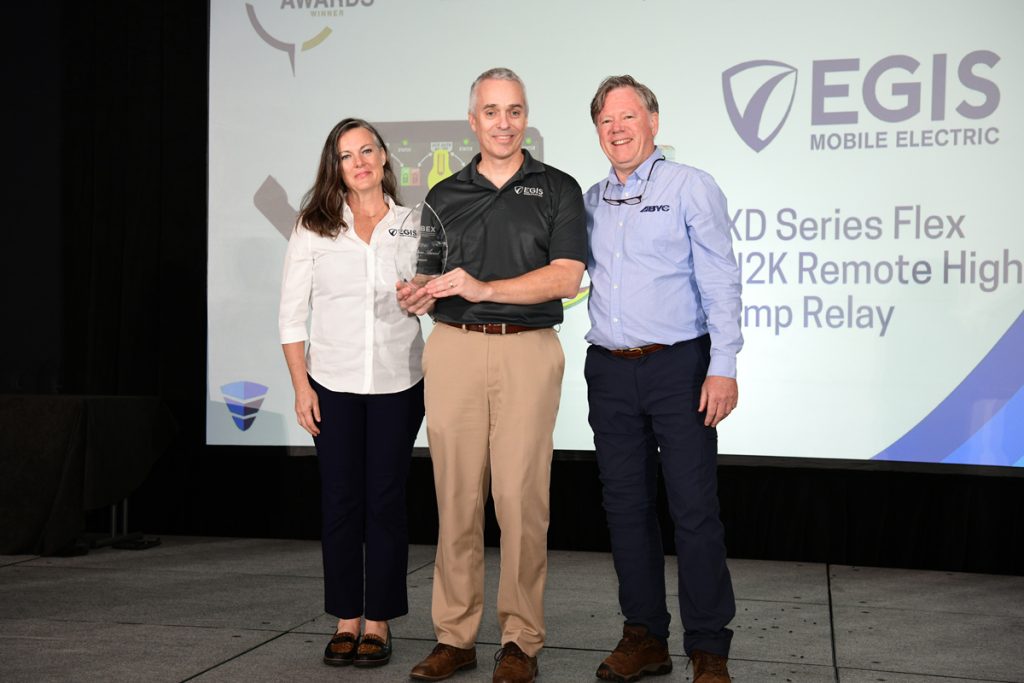
2024 IBEX Innovation Award Interview with Egis Mobile Electric
“Innovation sometimes evolves slowly, and N2K compatible battery switching and charge management is no different,” said Egis Mobile Electric’s Eric Graham. “Just three years ago, a large, centralized N2K compatible battery switching product was released and won the IBEX Innovation award. The Egis XD Relays takes this innovation and applies a more discrete and modular approach.”
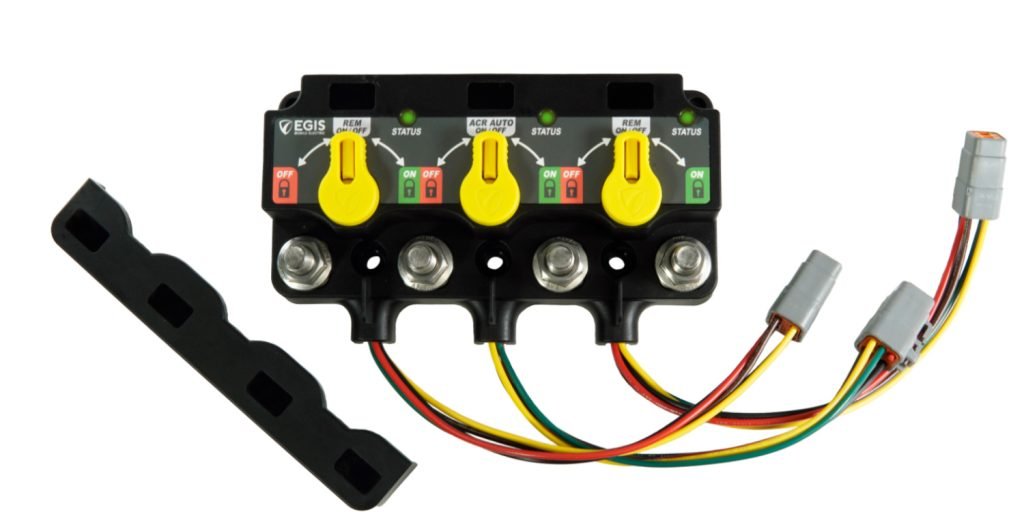
The XD Series Flex N2K Remote High Amp Relay offers a new, innovative solution to remote battery switching and charge management for the recreational marine industry, without increasing boat weight and building cost. The product is designed to work seamlessly with existing NMEA-2000 systems, improving both functionality and space efficiency.
What problem was the XD Series Flex N2K Remote High Amp Relay designed to solve?
Remote battery switching and battery charge management within the recreational marine industry have grown in terms of the percentage of boats implementing remote high-power switching. At the same time, vessels are increasingly implementing digital switching and control systems primarily managed over NMEA-2000 networks to provide advanced functionality and the ability to remotely control and monitor vessel systems.
While several NMEA switching, control, and reporting systems exist for low-amperage boat circuits, there was only one market solution for high-amperage battery switching. The problem with the existing solution is that it is a very large single solution for an entire boat. It requires boat builders to install long, heavy-gauge wires between a centralized switching system and batteries distributed across the vessel (bow, stern, and sometimes across the multiple hulls of boats). This undermines the primary benefit of remote battery switching, which is to reduce heavy cable length, cost, and weight.
Could you describe the innovation and advances featured in the XD Series Flex N2K Remote High Amp Relay?
The XD-NMEA-2000 remote battery switches provide a balanced, yet distributed, approach to deploying high-amp NMEA-controllable battery switching.
Extremely small modules with one, two, or three high-amp relays can easily be deployed in a centralized approach, should a boat have its batteries optimally located in one area. But, importantly, the XD-NMEA-2000 switches can be distributed throughout a boat, to reduce heavy gauge wire lengths and balance the boat’s weight distribution.
For example, one compact Dual XD can support both the battery-to-battery charge management and the remote on/off switching of a bow thruster/windlass battery.
Who is the target market for the XD Series Flex N2K Remote High Amp Relay?
The goal of the XD Series Flex N2K relays is twofold: First, continue the mission of the original XD Series (analog controlled) products to encourage more and more remote battery switching to smaller boat sizes, to increase safety afloat through automating the battery switching and charge management functions, which can greatly reduce the likelihood of boaters becoming stranded due to dead batteries.
And, second, boatbuilders wishing to expand their N2K systems to the high-amp circuits can now do so without being forced to add unnecessary cable weight, cost and space. Because the XD Series Flex N2K can be deployed for approximately 50 percent less in cost than the existing market offering, Egis feels confident that both of the above targets can be achieved.
What feedback have you received?
Early customer trials have resulted in resounding praise about the simplicity of deployment, the robustness of the product, and the ability to flexibly deploy the NMEA-controllable high amperage switches and Voltage Sensing Relays in pinpoint locations throughout vessels.
What kind of boats is the XD Series Flex N2K Remote High Amp Relay being used on?
The XD N2K Relays are used on a wide variety of boats. Over the past several years, a growing number of smaller boats have adopted NMEA-2000 compatible displays, control systems, and digital switching systems. The Egis N2K XD Relays effectively leverage this trend and simplify the adoption of automatic and remote battery switching and charge management.
How has it changed the boatbuilding process?
The Egis N2K Remote XD Relays reduce discrete analog wires that were previously required for high-amp switching, and instead allow interconnection to existing NMEA-2000 backbone cables already routed throughout the boat. The Egis N2K XD Relays also reduce unnecessary additional components, therefore reducing boat cost and equipment space required.
Why do you think no one has designed a successful product like XD Series Flex N2K Remote High Amp Relay before?
Innovation sometimes evolves slowly, and N2K-compatible battery switching and charge management is no different. Just three years ago, a large, centralized N2K-compatible battery switching product was released and won the IBEX Innovation award. The Egis XD Relays take this innovation and apply a more discrete and modular approach.
While the cost of deploying NMEA-2000 electronics and physical connections within discrete devices has gone down, the ability for Egis to, most importantly, recognize and develop solutions that meet the need for discrete distributed high amp N2K switches was simply not obvious to legacy product developers.
What obstacles arose during the R&D process?
The NMEA-2000 PGN list and established methods for defining and modifying certain device parameters were quite limiting. The Egis XD N2K Relays report battery voltage, but as part of deployment, a battery instance ID must be defined. We found during development that the NMES-2000 standard does not offer a method to remotely, via N2K, change the battery instance number that a device would be reporting. This required Egis to take steps to create programming flexibility on the device through onboard dip switches. Because the Egis Remote XD N2K relays do not use any proprietary protocols, Egis found several digital switching systems that we wanted to be compatible with certain limitations in the number of battery voltages they could receive, as well as the battery bank instances they could process. In the end, Egis was able to make a universal, generic N2K-compatible product that works with all existing digital switching and vessel control solutions, which is a great advantage for builders.
What plans are in place for the future of the XD Series Flex N2K Remote High Amp Relay?
The Egis N2K Flex XD Relays are the beginning of a broader ecosystem of NMEA-2000 compatible products that will augment the utility of the existing solutions, through features including state of charge/state of health (SOC/SOH); current monitoring; and basic low and medium ampere power distribution, switching, and I/O support.
What impact do you see XD Series Flex N2K Remote High Amp Relay having on the boating industry?
The Flex XD N2K Remote Relays will continue driving the adoption of remote battery switching and charge management to smaller and smaller boats, and those vessels will be more closely aligned as value-driven solutions. By simplifying the installation and lowering the financial barrier to adopting these technologies, the safety benefits of remote switching will be unlocked for more and more OEMs and their customers.
 Theresa Nicholson is an award-winning journalist who’s covered the marine industry for 25 years. She is the former senior editor of Cruising World, a judge for Newport for New Products, and a judge for the IBEX 2024 Innovation Awards program. She’s covered past IBEX shows for Soundings Trade Only, Practical Sailor, and Cruising World. Nicholson lived aboard her 31-foot ketch for 11 years and sailed from Miami to Malaysia. Her work currently focuses on weather, marine safety, risk analysis, and high latitude sailing.