IBEX 365 News
From Assistance to Intelligence: The Next Step in Boating with NEUBOAT
How smarter perception, navigation, and docking bring technology providers, boatbuilders, and dealers closer together.
Approaching a crowded marina can place several demands on a boat operator at once: judging distance, checking blind spots, monitoring nearby traffic, and managing propulsion while responding to wind and current. Cameras, autopilots, and joystick controls have helped make these tasks more manageable. As these tools become more intelligent and connected, they can also interpret the surrounding environment and provide more active assistance.
For Avikus, this transition is central to the development of NEUBOAT, its navigation and docking assistance technology for recreational boats. Bringing these capabilities onboard also requires closer collaboration among the technology providers, boatbuilders, and dealers who shape the boating experience.
Familiar Equipment, New Capabilities
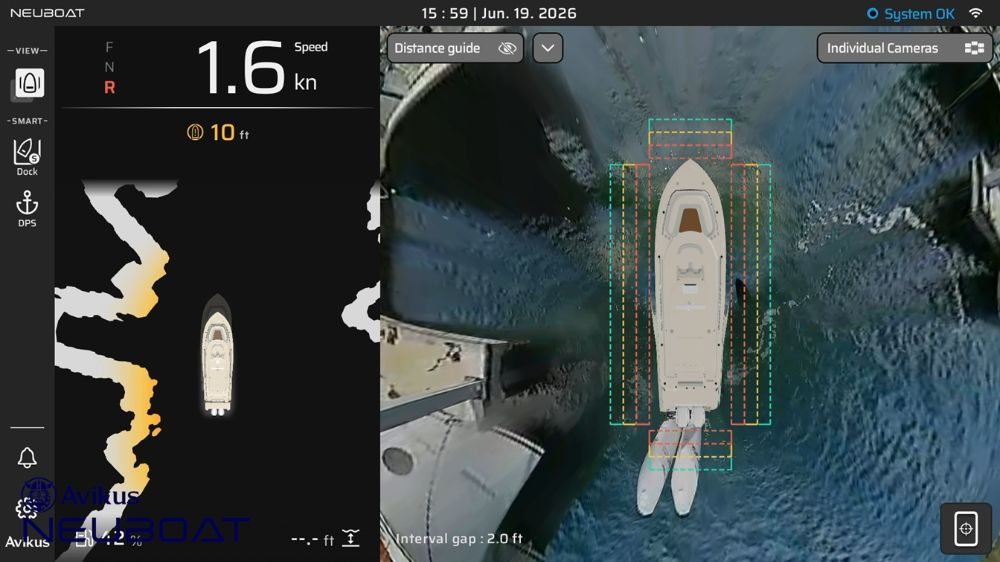
The change begins with the camera. A conventional camera gives the operator another view but interpreting that image remains a human task. With machine perception, camera imagery can support object recognition, distance estimation, and proximity alerts. The camera becomes a sensor that helps both the operator and connected systems understand the boat’s surroundings.
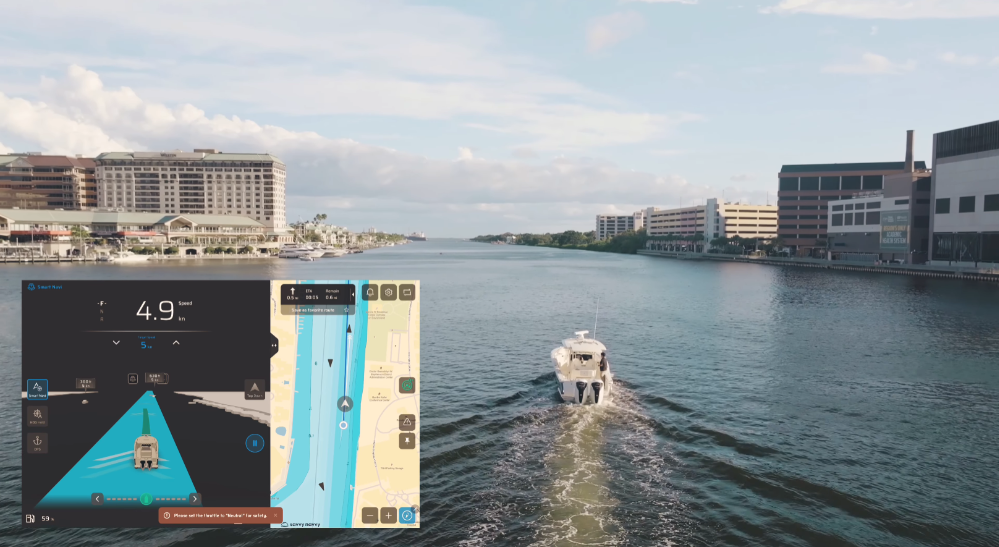
Autopilot functionality is evolving along a similar path. Maintaining a heading or following a route addresses one part of navigation. Integrating environmental awareness with vessel control allows assistance to extend to recognizing potential hazards and supporting avoidance maneuvers. Perception and control must work together within defined operating limits, with the operator understanding and supervising the system.
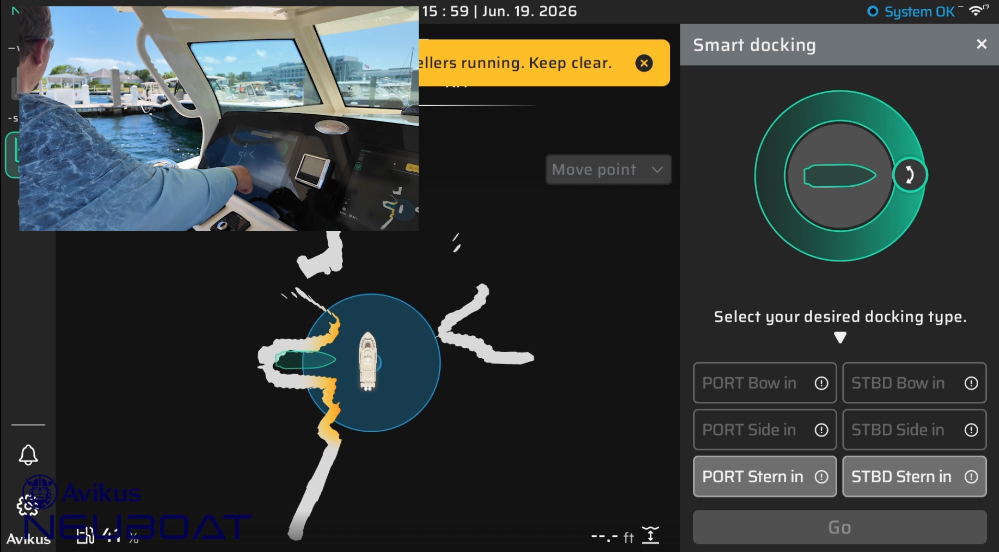
Joystick control has made low-speed maneuvering more intuitive. Connecting that control with awareness of nearby docks and obstacles enables more active docking assistance. The system can take on more of the maneuvering task while the operator monitors the surroundings and remains ready to intervene.
NEUBOAT connects perception, navigation assistance, and docking control to turn information about the surrounding environment into useful support at the helm. Available functions depend on the vessel’s propulsion configuration, interfaces, and system integration.
Intelligence Must Fit the Boat
As assistance becomes more closely connected to vessel control, integration becomes an essential part of performance. Camera placement determines what the system can see. Hull geometry, mounting height, and obstructions influence coverage. Engine count, position, and propulsion characteristics affect how the boat responds to control inputs.
These relationships make vessel-specific installation, calibration, and on-water validation important. A system must be able to interpret its surroundings and respond appropriately through the boat on which it is installed.
Early collaboration creates opportunities to address these requirements during design. Sensor locations, flush-mounted cameras where appropriate, cable routing, helm integration, and service access can be considered together. This helps align the technology with the vessel’s appearance, production requirements, and intended use.
New-build programs provide particular flexibility to make these decisions before production. Refit projects also offer opportunities, although existing structures, mounting locations, and access may require additional planning. In both settings, coordination between the companies developing, building, and installing the system helps turn technical capability into a consistent onboard experience.
A Shared Role for Technology Providers, Boatbuilders, and Dealers
Technology providers develop the perception and control capabilities, build adaptable systems, and define integration requirements. They support calibration and validation, resolve technical challenges, and use feedback from installations and on-water operation to improve performance. Their role includes making the technology practical for partners to integrate and support.
Boatbuilders contribute knowledge of vessel design, propulsion characteristics, production processes, and customer expectations. They incorporate integration requirements into each model and help define the functions and customization that suit its intended use. Their involvement connects system development with the boat’s design and the experience they want to deliver to customers.
Dealers contribute installation expertise, service experience, and direct relationships with boat owners. They carry out accurate installation, calibration, and commissioning, help customers understand the system’s operation, and provide ongoing support. Their observations from everyday use help technology providers and boatbuilders identify opportunities to improve both the product and future installations.
These responsibilities connect throughout the vessel’s life. Sharing requirements early, validating the installation together, and maintaining feedback from the field allow all three groups to contribute to a well-integrated and well-supported system.
From Collaboration to On-Water Experience
A practical starting point is to select one boat model for joint integration and validation. Agreeing on its configuration, intended functions, installation approach, and evaluation process gives partners a clear basis for development. The experience gained can then inform additional models and future production programs.
At IBEX 2026, Avikus will explore these themes in its presentation and demonstrate NEUBOAT on the water, including enhanced Smart Docking capabilities. Attendees can see how perception and control work together and discuss the integration considerations relevant to their own vessels.
Demonstration sessions are planned for October 6–8, starting on the hour and lasting approximately 30 minutes, at North Dock, Slip D3. Boatbuilders, dealers, and industry partners are invited to contact Avikus to arrange a session and discuss opportunities for collaboration.
 About
About